
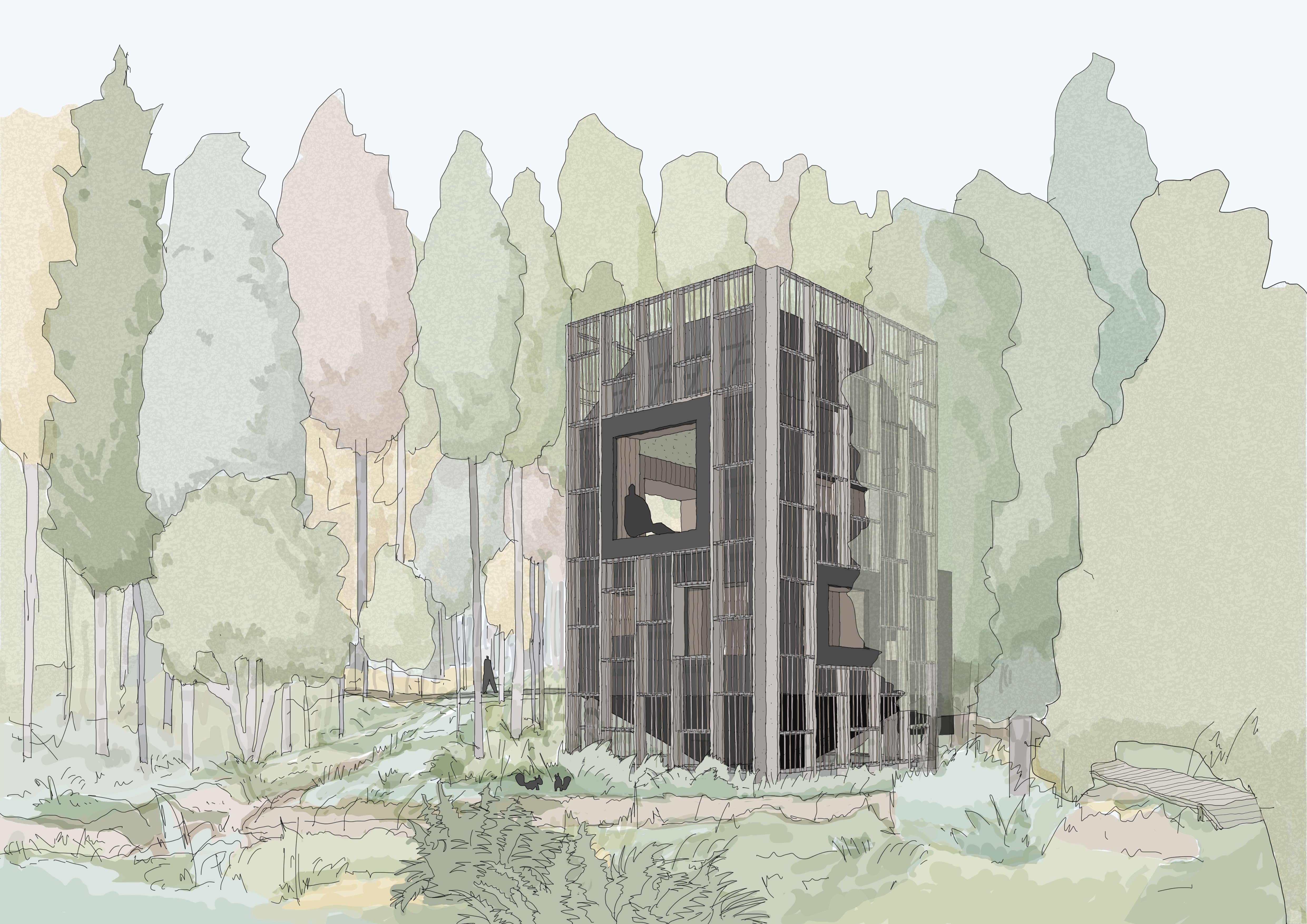
Komorebi is a woodland site for a number of architect-designed rental treehouses, built from timber sourced on site and milled locally.


Our proposed treehouse occupies a small clearing located at the threshold between the dense woodland and the open vista of the ride. Conceptually, the architecture seeks to restore the missing trees in the clearing through a vertically articulated timber veil that wraps around the main building. The veil is formed from primary timber posts with secondary infill panels constructed of coppiced timber, representing the species found within the woodland. This screen helps to create a sense of enclosure to the treehouse, filters light and provides shading and privacy. The main accommodation is conceived as a simple black form - a solid, enigmatic presence glimpsed through the permeable timber veil.


The treehouse itself is elevated off the forest floor to minimise its impact on the earth, with a small plant area accommodating the toilet waste container and incoming services. External stairs up to the entrance level provide access to the bathroom and bed space, which is carved into the architecture like a woodpecker’s nest. A top-lit internal stair provides access to an open plan kitchen/dining /living space with glazed openings affording elevated views through the tree canopies. This top level is crowned with a dramatic roof volume as a counterpoint to the more intimate spaces found below.


This design facilitates fresh ways of interacting with the forest through varying degrees of exposure and shelter. All the while, the impact of the construction upon the forest is minimised, adopting off-grid servicing, a compact footprint in a natural clearing and construction materials sourced from the woodland.


